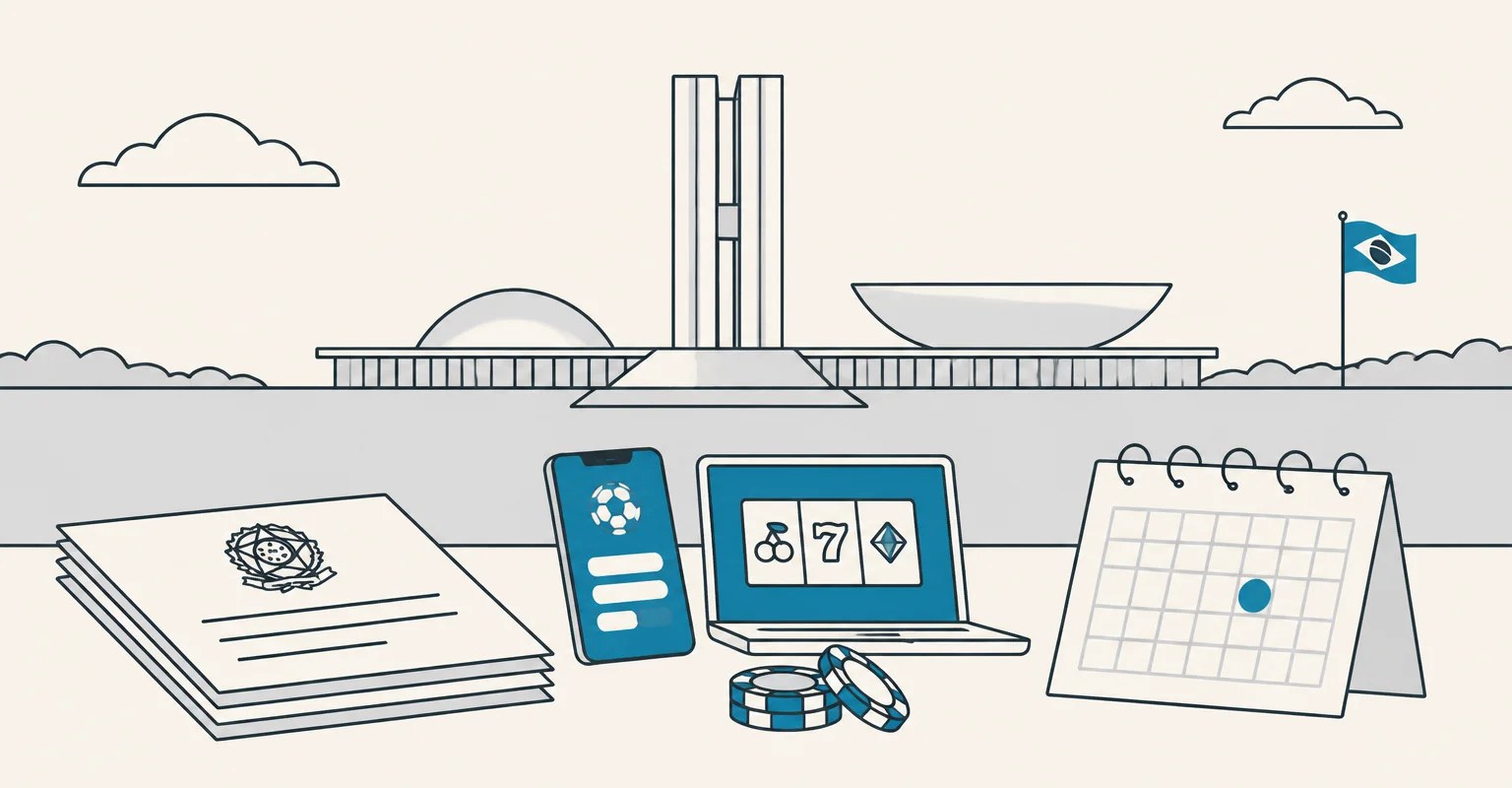
President Luiz Inácio Lula da Silva has imposed an immediate ban on sports betting and online casinos in Brazil, just over a week before the first round of the presidential election. The provisional order bars the operation, offering, intermediation and advertising of betting, reversing a market that has expanded rapidly since online gambling was legalised in 2018.
The order also prevents new deposits into betting accounts. Customers and bookmakers have until Oct. 5 to withdraw existing balances.
The decree took effect immediately, but Brazil’s Congress must approve it within 120 days for it to remain in force. Lula separately signed a bill establishing criminal offences related to fixed-odds betting. The Guardian reported that the government’s criminal-law proposal includes offences for promoting betting and using personal data to solicit bettors.
Fixed-odds betting is the dominant form of online sports wagering. Lula said he had opted for a “hard, drastic and necessary measure” to stop betting companies profiting at the expense of Brazilian families, arguing that gambling had pushed households into debt and left children and teenagers without adequate protection from online access.
The ban marks a sharp turn from Lula’s earlier approach. His government signed Brazil’s first law regulating and taxing betting companies in December 2023, then blocked more than 2,000 websites deemed irregular. As covered in August, a Brazilian study nevertheless estimated that unlicensed operators still accounted for 38% to 44% of online wagers in the first half of this year.
Lula has called the betting industry a “cancer” and accused it at the United Nations General Assembly of “transforming addiction into profit”. A 2025 study by the Institute of Studies for Health Policies put the annual social cost of betting and gambling at 38.8 billion reais and linked gambling to higher suicide and depression rates.
The scale of the legal market raises the stakes of the prohibition. Brazil’s central bank estimated that Brazilians spent about 30 billion reais a month on bets last year, including spending by Bolsa Família beneficiaries, who had been blocked from betting platforms the previous year. Sports-betting firms took in 62.5 billion reais in 2025, while the country’s main football clubs received 1.1 billion reais in sponsorship payments from the industry.
Football clubs warned that the ban could abruptly end betting sponsorships. Grêmio said bookmakers had become one of sport’s principal revenue sources and argued that changing the law could drive consumers to illegal betting and leave clubs facing insolvency.
The Brazilian Institute for Responsible Gaming, which represents about 75% of the domestic betting sector, similarly said a total ban could put 58 billion to 73 billion reais in revenue at risk. It argued that prohibition would not remove demand, but could steer bettors towards illicit platforms without regulated-market protections.
The intervention comes during a tight re-election contest between Lula, who is seeking a fourth term, and Flávio Bolsonaro, son of the jailed former president Jair Bolsonaro. Flávio Bolsonaro called the measure populist, hypocritical and politically motivated, describing it as an electoral move. An Atlas and Bloomberg survey published during the week of the announcement found that 59.9% of Brazilian adults supported a ban on internet betting.