A study commissioned by the American Gaming Association found that U.S. gamblers were more likely than non-gamblers to meet its threshold for high financial literacy, while also identifying a mismatch between prediction-market users’ confidence in mathematics and their tested ability.
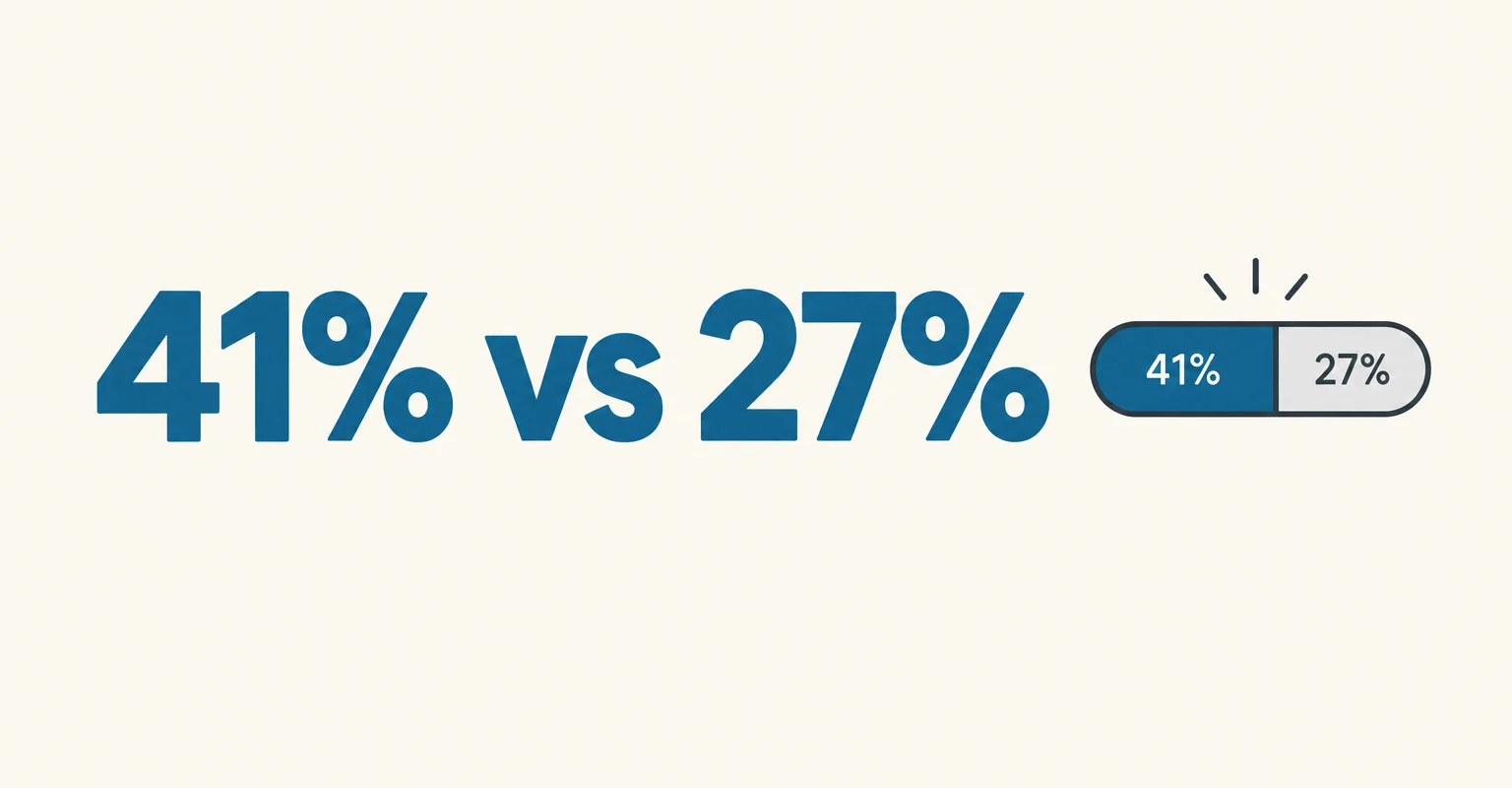
Forty-one percent of gamblers were classified as highly financially literate, compared with 27% of non-gamblers. Gamblers averaged 3.93 out of five on the financial-literacy index, versus 3.72 for non-gamblers, a statistically significant difference.
The research surveyed 3,201 U.S. adults online through Prolific from July 15 to July 21. After data-quality screening, the sample comprised 3,149 people, including 537 sports bettors, 574 prediction-market users, 557 casino players, 495 iGaming users and 986 non-gamblers. The stated margin of error was plus or minus two percentage points at the 95% confidence level.
Sports bettors demonstrated particularly strong financial literacy and mathematical capability, and had a more accurate view of their own mathematical skills. Prediction-market users, by contrast, expressed high confidence but performed in line with non-gamblers on objective mathematical-capability measures.
The AGA said that gap raises consumer-protection concerns, particularly where sports wagers are presented as investments or money-making strategies. Such framing could lead consumers to believe they can outsmart sophisticated counterparties they regard as peers. David Forman said gambling should be promoted and approached as entertainment rather than a financial strategy.
The study also found an overall pattern of elevated subjective numeracy among gamblers, while their actual mathematical skills were identical to those of non-gamblers. Casino players recorded the highest Positive Play Scale scores among the gambling segments, while participants with moderate or high financial literacy had significantly higher Positive Play scores than those with low literacy.
The findings sit alongside a broader, less uniform research record. A systematic review of nine studies of financial literacy and gambling said differing definitions and measurement methods limited comparisons across research. It also cited an Italian study in which scratch-off and slot or video-poker players were less likely than non-gamblers to answer all three financial-literacy questions correctly, underscoring that results can vary by gambling activity and methodology.
The AGA study called for further research into the potential relationship between responsible gambling and financial literacy, and highlighted its Play Smart from the Start campaign as a means of fostering realistic confidence and a better understanding of risk.