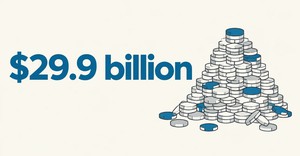
The least active two-thirds of sportsbook customers generated only 2.7% of estimated industry revenue, according to an analysis highlighted by Futurism. The remaining one-third of bettors, described as highly active, accounted for the overwhelming majority of earnings.
The analysis estimated that digital sportsbooks could forfeit about 60% of revenue without customers who make deposits hundreds of times a year. It also found that the vast majority of gamblers lost about 39 cents for every dollar deposited, while the top 1% of depositors lost nearly 78 cents per dollar, roughly twice that rate.
Those figures measure betting activity and losses, rather than establishing that every frequent bettor has a gambling disorder. But Futurism characterized the industry as relying on highly active bettors, including people with gambling problems, for substantial profits. It said gambling was more lucrative in 2025 than film, video games, music, books and museums combined.
FanDuel called itself an entertainment product and said all customers could use tools intended to support controlled play. These include deposit limits, timeouts and self-exclusion.
Separate reporting by ProPublica pointed to a similarly concentrated pattern in Connecticut. A 2024 study there found that 1.8% of problem gamblers accounted for 51% of sports-betting revenue. Matthew Gaskell told ProPublica that sportsbooks are especially interested in gamblers who lose frequently because a small group of active losers contributes a substantial share of revenue.
The concentration of gambling spending is not confined to U.S. sports betting. A GREO Evidence Exchange review found that gambling revenue generally comes from a disproportionately small group of customers. In British Columbia’s government online gambling data, 5% of players supplied 46% of revenue, while the most active fifth of players placed 82% of bets. The review cautioned that estimates of revenue from people with problem gambling vary by method, timing, location and gambling type.
The sports-betting market has expanded sharply since the Supreme Court’s 2018 Murphy v. NCAA decision allowed states to legalize it. A UC San Diego study published Nov. 11 found that national searches for gambling-addiction help rose cumulatively by 23% through June 2024, after sportsbooks expanded from one state to 38. Its authors said online sportsbooks had a substantially greater effect on such help-seeking than brick-and-mortar operations, and that public-health systems had struggled to keep pace with the expansion.